When I meet someone on a plane, and they ask what I do for a living, I say, well, I teach Computer Science for a day job, but my profession is poetry. What usually happens next is that their eyes glaze over and I can tell they’re mentally checking their watches to see how much longer the flight is going to take. Then, unless they think to ask me something about computers, usually to do with whether they should scrap their pcs for the latest hot-lick models, they tend to develop a sudden, burning, interest in Sky Mall. If I’d been some other kind of writer, a novelist or a screenwriter for instance, I’ve always thought it would have been better, but maybe not, because to most people watching cars go airborne over the top of Gough Street, heading down towards the bay screenwriters seem as irrelevant as tinsel on last year’s Christmas tree.
Be that as it may, I think it’s fair to say that we poets find ourselves at the bottom of the interest scale with most of the non-reading public. One of the consequences of that is that we have fewer chances to connect with audiences than do people who work in other literary genres. So, being in the minority and being relatively poor, even in the literary world, we help each other out whenever we can, right? Well, in my experience, not necessarily.
For example, when I meet some poets, I get the feeling that they’re sizing me up to see if I’m any threat. If the verdict is that I’m not, then they relax. If they decide otherwise, they clam up and start looking over my shoulder for someone more useful to talk to. Sometimes, it goes much farther than this, perhaps even to the point of paranoia. For instance, a few years ago, when two poets came to my town to teach in the writing program, I thought, great, more poets, and bought their books. But not only have they not been polite to me--without ever exchanging more than ten words total with me in all the years since they’ve come, they put me down to their students on a regular basis. So why are they doing this? I’ve decided it’s because they’re protecting English, which they see as their territory. It seems such a pity, but I know it’s not an isolated case. I’ve heard other stories like that, where certain writers seem to have peed on their four corners, to make sure interlopers are aware that only they, the purveyors of urine, and their students are welcome within their borders. And if someone tries to cross that line, he or she finds out what that odd odor means and, to mix a metaphor, in spades.
Luckily, this isn’t universally the case, maybe not even generally so. Over the years, I’ve met some hugely generous people, to name only a few: Andrea Hollander Budy, Nick Samaras, Jo MacDougall, Frank Gaspar, Maurya Simon and, more recently, Ruth Schwartz, all terrific poets and all genuinely happy when any of us gets lucky. We buy each others’ books and tell people about each others’ work. To be fair, we’ve often become friends in the first place because we did like each others’ work. If you think about it, how much more deeply can you know someone than by living with his/her poetry. And sometimes -- in the ancient tradition-- we talk in poetry. For instance, a few years ago, Andrea and I had a poetry conversation, with the goal being neither of our greater glory but both of our greater growth. During that exchange, Andrea wrote some lovely poems which wended their way into her most recent collection, and I profited too, spinning off her intelligence in directions of my own. Nick Samaras and I are now doing a similar thing- we send each other a poem a month, which we then critique back and forth until it falls to rest. Nick’s a fine critic, and I’ve learned a lot from him. And those are only a couple of examples. I have many wonderful friends and teachers among other poets. In fact, like many of us, I feel friendship, even kinship, to writers I’ve never met, just from their work.
But the most important of my own friendships are the warm, live ones. It’s a great feeling not to need to explain why I do what I do, because they already know since they’re the same, and in that mutual knowing I feel the sort of acceptance which I can’t always, in the last analysis, get from those closest to me. In fact, sometimes I think of my friendships with other writers as a kind of home base on the field of my life.
I’d like to leave you with an analogy. My husband makes beautiful stained glass. And because he wants to give something back, he donates windows to poor churches. We go to Mexico often, making that part of our trips, and when Gerald’s finished a project, we prospect for another. A few years ago, he built some windows for a church on a bumpy street in a barrio in Patzcuaro. Ger spent an especially long time on those- there were eight, and he designed them beautifully, with an Indian woman in the foreground and colors which seemed just right for the bright plastic streamers which adorned the inside of that church. When the windows were ready, we took them to the sacristans in Patzcuaro, a couple named Adolfo and Josefina, to explain how install them and help them do it.
It wasn’t an easy job because the windows weren’t set up to receive glass, so there was a fair amount of improvisational engineering- a sort of engineering skat- to be done before we could start the actual installation. The three of us, Adolfo, Ger, and I had been working for several days, and neither Adolfo not Josefina had said a word about the windows. Now, I knew how hard Ger had worked on them– months and months in the barn. So, though I felt guilty about it, I was also beginning to feel let down and a little annoyed. More and more, I wanted someone besides me to admire those windows. Or at least thank Ger for his trouble. But then one day Josefina and I were sitting at the table in her tiny house with its glass-less windows and its dog on the roof, where they lived with their eight children, and she said: You know, we don’t have much, but everything we have, each person gets a little bit.” And then I understood why they hadn’t thanked us. Because, of course we’d shared what we had. And that felt right to me, and I think it’s how we poets should be to each other too, how my dear friends are already and how I’d like to be too: we don’t have much, but everything we do have, each of us gets a little bit.
BIO
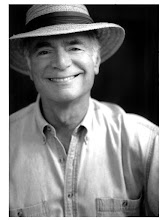
Lola Haskins' most recent collection is The Rim Benders (Anhinga). Desire Lines, New and Selected Poems, is forthcoming from BOA in 2004. She teaches Computer Science at the University of Florida and is a 2003 NEA fellow in poetry.
Showing posts with label University of Florida. Show all posts
Showing posts with label University of Florida. Show all posts
Monday, May 10, 2010


Stephen Spender Once More by Robert Dana
Until 1976 when he became my distinguished colleague in the writing program at the University of Florida, Stephen Spender was just a biographical essay and a handful of brilliant lyrics I first encountered in Louis Untermeyer’s anthology of Modern American and Modern British Poetry.
Oh, I’d met him at close range back in the 1950’s when he came to give a reading at the University of Iowa and to talk to a bunch of fledgling poets at the Writers’ Workshop. After Spender’s reading that evening in the senate chambers of Old Capitol, Paul Engle had arranged a rump session so that the students could talk with Spender one on one over beer in the basement of a local bar, perhaps Irene Kenney’s. It’s with no small amount of embarrassment that I recall the subject of our conversation, in which I had the presumptuousness and dim wit to chide him for certain Britishisms in his Lorca translations.
Of course, Stephen’s world was so large and his history so long and rich that, when we really did meet in Florida and share several months of our lives, he retained no memory at all of our having met twenty years earlier, and, thank god, no memory of my youthful stupidities.
*
Stephen was part of the bait dangled before me by the late Richard Green, then chairman of the English department at the University of Florida. He also offered me a much lighter teaching load and the chance to teach graduate students, and more money than I was presently making at Cornell College in Iowa. I had just returned from a sabbatical in England where I’d gone to recover from some serious surgery and to try to finish the book which later became In A Fugitive Season, so I didn’t think my dean would give his permission for another leave of absence.
Encouraged, however, by my new wife, Peg, and by Dick Green, I explored the possibility with my colleagues and the dean, and was granted permission to accept Florida’s offer. It would be a full year visiting writer appointment, and I would be Stephen Spender’s colleague when he arrived for the third quarter. It turned out to be a seminal year, needless to say.
*
Our friendship began in a very personal way. Shortly before Stephen’s arrival in the spring, I casually asked someone, at my wife’s prompting, perhaps Dick Green, where Stephen would be living. He was, at the time, nearly seventy. I was shocked to find that neither the department nor the university had made arrangements for their distinguished guest. In addition to getting on in years, he would be arriving in Florida from wintry England. Peg and I reasoned that someone needed to make a move on his behalf.
So we contacted the supervisor of our building to find out what furnished apartments might be available. There were several. We got the department’s approval, and then canvassed department members via their mailboxes, to round up dishes, pots and pans, silverware, blankets and linens, so that when Stephen arrived he’d have decent digs awaiting him.
When he did arrive, he needed phone service, of course. And it was here that Peg stepped in, and the episode provided one of our favorite stories. Stephen had trouble understanding the operator at Bell Southern, and she had trouble understanding his English accent, so he asked Peg to do his talking for him. At one point, she said, “Stephen, they want an idea of how much of a bill you might average a month.” “Oh tell them a hundred dollars,” he said, grinning, and then sotto voce, “It’s probably more like five hundred.”
The bill was probably “more like five hundred” given the family calls—to his wife, Natasha and his daughter Lizzie in London and to his son Matthew in Italy; and the business calls—to his old friend Christopher Isherwood in L.A, and to International PEN on Taiwan (No, he wouldn’t be coming), and to his editor Jason Epstein at Random House in New York.
Perhaps it was at that moment that it began to be clear that Stephen dealt with people straight on, by and large. He didn’t see himself as either a “great man” or a “great writer.” In fact, he saw himself as sometimes a comic “figger” as he would have said.
*
So began a friendship I could never have imagined having, and one that would last nearly twenty years until Spender’s death in 1995. A friendship from which I learned at least as much about human decency and perspective as I did about literature and what it means to live a life of letters.
One of the first things I learned from Stephen was what real achievement and fame were. His record spoke for itself. I was forty-six, had published two books, and was still getting rejection slips from various magazines. I was certainly not getting phone calls from PEN International. So there was no question of competition between us, as there always is to a certain degree, between contemporaries. Stephen wasn’t my mentor, nor was I his student. It was a case of two poets from different generations and different cultures sharing what was there to be shared.
He shared his wisdom, his stories—of himself and Auden at Oxford (“I printed his first little book on my card press in my room.”), of his experiences in Spain during the civil war and in Britain as an air-raid warden during the blitz, and his attitudes toward poetry. For my part, I drove him to the university when needed, explained him to his undergraduate class, which didn’t know what to make of him and treated him, at first, like a fragile family heirloom; and plied him with questions about his life and work. In May of 1976, in my role as a contributing editor of The American Poetry Review Review, I actually conducted a formal interview with him. It took place, as I recall, in the living room of our Gainesville apartment. Here are a few clips from that afternoon:
“…If one thinks of one’s own contemporaries who had talent or even genius. I think that, really, three qualities are necessary. First of all, to have a little genius; then to have quite a lot of talent, and then, thirdly, to want to do it...You have to want, in some crazy way, to write poetry. I think quite a lot of people want to be a poet, but that’s rather different from actually wanting to write poetry poetry.” .”
“Eliot in ‘The Four Quartets’, for instance, is always really a thinking poet. And also a poet with a mystical vision. And when the thinking is intense and the mystical vision is intense, he discovers a language which is very strange, and which is what we think of as the best of Eliot. But when the thinking is sententious—about, you know, growing old, and all that kind of thing,--the form can become sententious. He hasn’t got the talent which can invent an interest in the language which is beyond what is actually being said…
“…I think that American poets believe that, as Walt Whitman said, “To have great poets, there must be great audiences, too...And I think the American poet does feel that deeply, and he feels it’s something of a tragedy if he doesn’t get a great audience…I think that’s a tragic point of view, that you need vast audiences.”
Once, during one of our evening conversations, I asked him how he’d felt when Auden died.
“I felt the way I did when my brother died—“ he said, “that now I could go out and drive the car. At the end of this life, dealing with Auden was like dealing with a corporation—Auden, Auden, Auden, & Auden. It wasn’t very pleasant.”
And so I learned that fame, if it comes to one, is something best carried lightly. I learned that when Spender spoke of walking the shore of Lake Geneva with Merleau- Ponty, or of spending an afternoon with his friend Henry Moore, or told some anecdote about Louis Mac Neice, he wasn’t trying to impress you. He was merely recounting an interesting or pleasant moment in his life or a personal opinion.
Stephen had no need of boasting or name-dropping because he was sure of who he was, even if he tended to underplay his achievements. His autobiography World Within A World makes it clear that early on he had ceased to lie to himself or anyone else about who he was, or why he did what he did. (“Oh, it wasn’t politics that caused us to go to Berlin. We went there to chase boys,” he said to me once, with a laugh.) He had learned young to rely on his intelligence and his sense of humor. His dignity, generally, was as sure and casual as his rumpled clothes.
*
After Florida, we met almost once a year between 1976 and 1978, and sporadically thereafter, both in England and the U.S. When I left the University, they offered me a position. But upon returning to Iowa, I learned that the poet I’d replaced, and whom I’d thought of as a friend, was circulating a document damning both me and another member of the writing faculty. I was stunned and couldn’t believe it. When Stephen heard what happened he was furious and came to my defense. Even after the poet had been let go, Stephen telephoned him and demanded that he apologize to me and withdraw his remarks. The man refused, of course, but it was a surprising measure of our friendship.
I was instrumental during these years in bringing Spender to Detroit where I was the visiting poet at Wayne State. He gave a reading and a lecture on Modern Poetry and Modern Art. It so happened that the original paper wall-sized cartoons of Diego Rivera’s mural in the Detroit Institute of Art had just been discovered in some dusty old archive of the museum. We were invited to view them from a mezzanine where they were rolled out below us.
He also came to Cornell College where I taught and spent a month there. He taught a seminar on Modern Poetry to a group of handpicked students, and gave three lectures and a farewell reading to packed houses. Writers and literary people came from all over Iowa came to hear him.
Mount Vernon, Iowa, is of course, a very small stage for such a large player, so one weekend, Peg and I arranged a visit to the Guthrie Theater in Minneapolis. Since Stephen had known Tyrone Guthrie, the theater people set us up with fine seats and a backstage tour.
One of the plays was Waiting For Godot. It was a compelling and polished performance, so when it was over Peg and I inquired what Stephen thought of it. “It was quite good, you know. I saw the play in London and didn’t like it at all and walked out after the first act,” he said with a twinkle in his eye.
*
I saw Stephen several times after that, once at his house one evening in St. John’s wood where we had a wonderful supper of “scraps” that Natasha had prepared, and another time with Peg at Westminster Abbey when he delivered the eulogy for Henry Moore, after which he took us to The Groucho Club, a spot whose patrons' books were displayed behind the bar.
*
My world’s a smaller place without Stephen. But the sense of perspective I gained from being in his presence from time to time, my sense of what’s really important, my sense of decency and compassion and craft is a legacy that’s still with me.
“I think continually of those who were truly great/Who, from the womb, remembered the soul’s history,” Stephen wrote in an early poem. Oh, yes. And so should we all.
BIO NOTE:
Robert Dana was born in Boston in 1929. In the mid-1950's he studied at the University of Iowa Writers' Workshop under Robert Lowell and John Berryman. He received National Endowment Fellowships for Poetry in 1985 and 1993, and The Delmore Schwartz Memorial Prize in 1989. He was recently appointed Poet Laureate of Iowa. His books include The Morning Of The Red Admirals (Anhinga Press, 2004), Summer (Anhinga Press, 2000) and A Community of Writers: Paul Engle And The Iowa Writers' Workshop (University of Iowa Press, 1999).
Oh, I’d met him at close range back in the 1950’s when he came to give a reading at the University of Iowa and to talk to a bunch of fledgling poets at the Writers’ Workshop. After Spender’s reading that evening in the senate chambers of Old Capitol, Paul Engle had arranged a rump session so that the students could talk with Spender one on one over beer in the basement of a local bar, perhaps Irene Kenney’s. It’s with no small amount of embarrassment that I recall the subject of our conversation, in which I had the presumptuousness and dim wit to chide him for certain Britishisms in his Lorca translations.
Of course, Stephen’s world was so large and his history so long and rich that, when we really did meet in Florida and share several months of our lives, he retained no memory at all of our having met twenty years earlier, and, thank god, no memory of my youthful stupidities.
*
Stephen was part of the bait dangled before me by the late Richard Green, then chairman of the English department at the University of Florida. He also offered me a much lighter teaching load and the chance to teach graduate students, and more money than I was presently making at Cornell College in Iowa. I had just returned from a sabbatical in England where I’d gone to recover from some serious surgery and to try to finish the book which later became In A Fugitive Season, so I didn’t think my dean would give his permission for another leave of absence.
Encouraged, however, by my new wife, Peg, and by Dick Green, I explored the possibility with my colleagues and the dean, and was granted permission to accept Florida’s offer. It would be a full year visiting writer appointment, and I would be Stephen Spender’s colleague when he arrived for the third quarter. It turned out to be a seminal year, needless to say.
*
Our friendship began in a very personal way. Shortly before Stephen’s arrival in the spring, I casually asked someone, at my wife’s prompting, perhaps Dick Green, where Stephen would be living. He was, at the time, nearly seventy. I was shocked to find that neither the department nor the university had made arrangements for their distinguished guest. In addition to getting on in years, he would be arriving in Florida from wintry England. Peg and I reasoned that someone needed to make a move on his behalf.
So we contacted the supervisor of our building to find out what furnished apartments might be available. There were several. We got the department’s approval, and then canvassed department members via their mailboxes, to round up dishes, pots and pans, silverware, blankets and linens, so that when Stephen arrived he’d have decent digs awaiting him.
When he did arrive, he needed phone service, of course. And it was here that Peg stepped in, and the episode provided one of our favorite stories. Stephen had trouble understanding the operator at Bell Southern, and she had trouble understanding his English accent, so he asked Peg to do his talking for him. At one point, she said, “Stephen, they want an idea of how much of a bill you might average a month.” “Oh tell them a hundred dollars,” he said, grinning, and then sotto voce, “It’s probably more like five hundred.”
The bill was probably “more like five hundred” given the family calls—to his wife, Natasha and his daughter Lizzie in London and to his son Matthew in Italy; and the business calls—to his old friend Christopher Isherwood in L.A, and to International PEN on Taiwan (No, he wouldn’t be coming), and to his editor Jason Epstein at Random House in New York.
Perhaps it was at that moment that it began to be clear that Stephen dealt with people straight on, by and large. He didn’t see himself as either a “great man” or a “great writer.” In fact, he saw himself as sometimes a comic “figger” as he would have said.
*
So began a friendship I could never have imagined having, and one that would last nearly twenty years until Spender’s death in 1995. A friendship from which I learned at least as much about human decency and perspective as I did about literature and what it means to live a life of letters.
One of the first things I learned from Stephen was what real achievement and fame were. His record spoke for itself. I was forty-six, had published two books, and was still getting rejection slips from various magazines. I was certainly not getting phone calls from PEN International. So there was no question of competition between us, as there always is to a certain degree, between contemporaries. Stephen wasn’t my mentor, nor was I his student. It was a case of two poets from different generations and different cultures sharing what was there to be shared.
He shared his wisdom, his stories—of himself and Auden at Oxford (“I printed his first little book on my card press in my room.”), of his experiences in Spain during the civil war and in Britain as an air-raid warden during the blitz, and his attitudes toward poetry. For my part, I drove him to the university when needed, explained him to his undergraduate class, which didn’t know what to make of him and treated him, at first, like a fragile family heirloom; and plied him with questions about his life and work. In May of 1976, in my role as a contributing editor of The American Poetry Review Review, I actually conducted a formal interview with him. It took place, as I recall, in the living room of our Gainesville apartment. Here are a few clips from that afternoon:
“…If one thinks of one’s own contemporaries who had talent or even genius. I think that, really, three qualities are necessary. First of all, to have a little genius; then to have quite a lot of talent, and then, thirdly, to want to do it...You have to want, in some crazy way, to write poetry. I think quite a lot of people want to be a poet, but that’s rather different from actually wanting to write poetry poetry.” .”
“Eliot in ‘The Four Quartets’, for instance, is always really a thinking poet. And also a poet with a mystical vision. And when the thinking is intense and the mystical vision is intense, he discovers a language which is very strange, and which is what we think of as the best of Eliot. But when the thinking is sententious—about, you know, growing old, and all that kind of thing,--the form can become sententious. He hasn’t got the talent which can invent an interest in the language which is beyond what is actually being said…
“…I think that American poets believe that, as Walt Whitman said, “To have great poets, there must be great audiences, too...And I think the American poet does feel that deeply, and he feels it’s something of a tragedy if he doesn’t get a great audience…I think that’s a tragic point of view, that you need vast audiences.”
Once, during one of our evening conversations, I asked him how he’d felt when Auden died.
“I felt the way I did when my brother died—“ he said, “that now I could go out and drive the car. At the end of this life, dealing with Auden was like dealing with a corporation—Auden, Auden, Auden, & Auden. It wasn’t very pleasant.”
And so I learned that fame, if it comes to one, is something best carried lightly. I learned that when Spender spoke of walking the shore of Lake Geneva with Merleau- Ponty, or of spending an afternoon with his friend Henry Moore, or told some anecdote about Louis Mac Neice, he wasn’t trying to impress you. He was merely recounting an interesting or pleasant moment in his life or a personal opinion.
Stephen had no need of boasting or name-dropping because he was sure of who he was, even if he tended to underplay his achievements. His autobiography World Within A World makes it clear that early on he had ceased to lie to himself or anyone else about who he was, or why he did what he did. (“Oh, it wasn’t politics that caused us to go to Berlin. We went there to chase boys,” he said to me once, with a laugh.) He had learned young to rely on his intelligence and his sense of humor. His dignity, generally, was as sure and casual as his rumpled clothes.
*
After Florida, we met almost once a year between 1976 and 1978, and sporadically thereafter, both in England and the U.S. When I left the University, they offered me a position. But upon returning to Iowa, I learned that the poet I’d replaced, and whom I’d thought of as a friend, was circulating a document damning both me and another member of the writing faculty. I was stunned and couldn’t believe it. When Stephen heard what happened he was furious and came to my defense. Even after the poet had been let go, Stephen telephoned him and demanded that he apologize to me and withdraw his remarks. The man refused, of course, but it was a surprising measure of our friendship.
I was instrumental during these years in bringing Spender to Detroit where I was the visiting poet at Wayne State. He gave a reading and a lecture on Modern Poetry and Modern Art. It so happened that the original paper wall-sized cartoons of Diego Rivera’s mural in the Detroit Institute of Art had just been discovered in some dusty old archive of the museum. We were invited to view them from a mezzanine where they were rolled out below us.
He also came to Cornell College where I taught and spent a month there. He taught a seminar on Modern Poetry to a group of handpicked students, and gave three lectures and a farewell reading to packed houses. Writers and literary people came from all over Iowa came to hear him.
Mount Vernon, Iowa, is of course, a very small stage for such a large player, so one weekend, Peg and I arranged a visit to the Guthrie Theater in Minneapolis. Since Stephen had known Tyrone Guthrie, the theater people set us up with fine seats and a backstage tour.
One of the plays was Waiting For Godot. It was a compelling and polished performance, so when it was over Peg and I inquired what Stephen thought of it. “It was quite good, you know. I saw the play in London and didn’t like it at all and walked out after the first act,” he said with a twinkle in his eye.
*
I saw Stephen several times after that, once at his house one evening in St. John’s wood where we had a wonderful supper of “scraps” that Natasha had prepared, and another time with Peg at Westminster Abbey when he delivered the eulogy for Henry Moore, after which he took us to The Groucho Club, a spot whose patrons' books were displayed behind the bar.
*
My world’s a smaller place without Stephen. But the sense of perspective I gained from being in his presence from time to time, my sense of what’s really important, my sense of decency and compassion and craft is a legacy that’s still with me.
“I think continually of those who were truly great/Who, from the womb, remembered the soul’s history,” Stephen wrote in an early poem. Oh, yes. And so should we all.
BIO NOTE:
Robert Dana was born in Boston in 1929. In the mid-1950's he studied at the University of Iowa Writers' Workshop under Robert Lowell and John Berryman. He received National Endowment Fellowships for Poetry in 1985 and 1993, and The Delmore Schwartz Memorial Prize in 1989. He was recently appointed Poet Laureate of Iowa. His books include The Morning Of The Red Admirals (Anhinga Press, 2004), Summer (Anhinga Press, 2000) and A Community of Writers: Paul Engle And The Iowa Writers' Workshop (University of Iowa Press, 1999).
Subscribe to:
Posts (Atom)